Posts

Showing posts with the label water conservation

Water conservation for time
Image
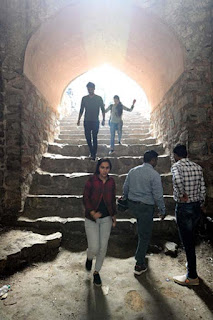
AGRASEN KI BAOLI in Delhi is a stepwell built on four levels. It was probably built in the 14th century by wealthy merchants, in the name of Raja Agrasen, the grandfather of Krishna and Balram. 108 steps lead downwards to the water level. The first two levels have niches in the walls that must have served as meeting places, and there are passages and rooms inside the baoli. In the northern end of the baoli is a well. In the past, as the water rose in the well, it would fill the baoli from the bottom to the top level.  The steps were built next to the shafts of wells so that whatever the level of the groundwater, residents could always access some. Agrasen ki baoli historical monument, flight of steps. (Souravmishra26 /  CC BY-SA 4.0  ) It seems likely that there was a stepwell here many centuries ago, we know for example, that the Bronze Age Indus Valley Civilization built these  water-harvesting  stru...
Food for Prosperity - In the footsteps of the Guru

Image
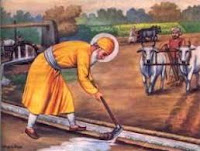
The  Mool Mantra and the  Opening words of  the Japji Sahib - the prayer written by Guru Nanak himself reads Ik Onkar (Every God is one. He is the creator of everything. The creator and the creation are one)  The word ‘Ik’ in ‘Ik Onkar’ stands for ‘one’, while ‘on’ means ‘everything’ and ‘kar’ refers to the God who is the creator of everything. Put together, ‘Ik Onkar’ means there is only one creator who has created everything. The Sikh prayer, of which ‘Ik Onkar’ is a part of, is called the ‘Mool Mantra’. The last Salok of the Japji Sahib - the prayer written by Guru Nanak himself reads Pavan guru paani pitaa, maataa dharat mahat. ( Air the guru; Water, the father; and Earth, the great mother.”  Divas raat doe daai daaiaa, khelai sagal jagat.(Day and night are like two nursemaids in whose lap all of creation plays) Changiaaiaa buriaaiaa, vaachai dharam hadur. (Good and bad deeds are recorded and read by the Lord of Dharma) Karmi aapo a...

What is Eco Art+Science

Image
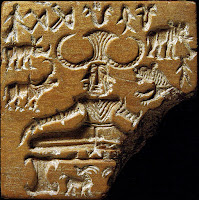
Pasupathi (animal carer) seal from the Harappan civilisation With just about every ecosystem in the world - ranging from snowcovered Himalayan mountains to tropical rain forests; from the wet Northeastern green forests to dry Northwestern deserts and fertile river plains, India is one of the richest countries in terms of biodiversity and associated traditional knowledge. Our traditions and ethical values of nature conservation are a source of inspiration and guidance for the future. India is one of the oldest civilizations in the world - known and respected for its rich culture and  heritage. Living in harmony with nature has been an integral part of our culture, and its beauty and  power are ingrained in our lives and our history. Bhimbetka Caves, Bhopal, Madhya Pradesh Palaeolithic wall paintings from the Bhimbetka Caves After all, no other culture can provide such a profound variety of cultural practice and ecologically sound relationships with natur...